PE and Sport Premium
PE and Sport Premium
PE and Sport Premium Plan – Academic Year 2025–26
Total PE and Sport Premium Allocation: £18,000
Academic Year: 2025–26
Lead Staff: Mr C Kearney
PE Lead: Mr C Kearney
Governor Lead: Mrs C Rodrigues
Total pupils on roll: 197
Vision and Intent
At St Christopher’s Primary Academy, we aim to provide every pupil with high-quality Physical Education and sporting opportunities that promote lifelong physical activity, confidence, wellbeing and participation. Our focus is on consistent delivery and engagement, with specialist support ensuring quality for all learners.
The full allocation of the PE & Sport Premium is invested in in-school delivery and after-school sports provision from Sports Coaching Group, ensuring sustainable expertise, high-quality coaching and increased pupil engagement.
Planned Expenditure and Impact
1. Curriculum PE Delivery
Objective: Ensure all pupils receive high-quality PE lessons that are active, inclusive and progressive.
-
Provision: Specialist coaches from Sports Coaching Group deliver planned weekly PE lessons across all year groups.
-
Cost: £18,000 (full allocation)
-
Impact Measures:
-
Improved pupil engagement and enjoyment in PE.
-
Observed progression in physical skills across year groups.
-
Teachers supported through observation and modelling of best practice.
-
Rationale: Bespoke specialist delivery ensures high-quality provision across the school and supports teacher confidence and pupil attainment in PE.
2. After-School Sports Clubs
Objective: Broaden opportunity for pupils to engage in sport beyond the curriculum.
-
Provision: Twice-weekly after-school clubs led by Sports Coaching Group coaches.
-
Focus: Multi-sports, inclusive games and active participation for all pupils.
-
Impact Measures:
-
Increased pupil participation in extracurricular physical activity.
-
Tracking of uptake, particularly for groups with historically lower engagement.
-
Rationale: Regular after-school sessions support pupils to build confidence, skills and positive attitudes towards ongoing physical activity.
3. Staff Development Through Coaching Model
Objective: Enhance teacher confidence and capability in PE delivery.
-
Provision: Teacher engagement in lessons delivered by Sports Coaching Group, enabling modelling and professional learning in situ.
-
Impact Measures:
-
Staff self-reported increase in confidence to plan and deliver PE.
-
Gradual transfer of practice into independent teaching.
-
Rationale: Working alongside specialist coaches builds sustainability by developing teacher confidence and supporting consistent quality across lessons.
Monitoring and Evaluation
Progress and impact will be regularly reviewed through:
-
Lesson observations and pupil voice feedback.
-
Participation data from after-school clubs.
-
Staff feedback on confidence and curriculum delivery.
-
Leadership review against the key indicators of the Sport Premium.
Impact Summary (Projected)
| KPI | Measure |
|---|---|
| Quality of PE Delivery | High-quality specialist lessons observed across the school |
| Participation | At least 75% regular uptake in after-school clubs |
| Staff Confidence | Increased teacher confidence in delivering PE |
| Inclusivity | All pupils have access to inclusive and engaging physical activity |
Sustainability and Next Steps
-
Embed coaching insights into whole-school PE planning.
-
Explore targeted provision for specific cohorts (e.g., SEN pupils, less active pupils).
-
Use pupil feedback to refine the after-school offer.
-
Consider future use of premium to supplement swimming or intra-school competition experiences, as appropriate.
Mission Statement for PE and Sports Premium at St Christopher’s
Inspire, believe…achieve!
How does this work?
Inspire: We aim to immerse our children in both sport and physical activity in order to inspire them to not only love sport but to make long lasting positive changes in their lives. They will develop their cultural capital in P.E by: discovering new sports; meeting new sporting heroes and role models; develop qualities such as resilience and determination; experience outdoor and adventurous trips; visit stadiums of elite athletes and hear from past pupils who have forged careers in sport.
Believe: All children will develop a belief that, they too, can use P.E to improve their physical and mental health. Through a carefully planned scheme of work that builds core skills and concepts in Key Stage 1 and progresses into more complex games in Key Stage 2, children will be given all of the tools they require to succeed in a range of sports and lead healthy and safe lives.
Achieve: It is our ambition that our P.E curriculum will enable our children to: lead longer, healthier lives; be able to swim to a standard that keeps themselves and others safe; be able to ride a bike competently and safely on the road; have a good level of physical fitness; have a direct pathway to external clubs so that they can continue to progress (and possibly reach elite standards) beyond Key Stage 2.
We hope to create a cycle of excellence at St Christopher’s where pupils are inspired by our culture of P.E, believe in themselves -getting more involved in sport and finally achieve in the long term by forging their own pathway in sport. Some of our former pupils are already professional athletes. We will be asking them to come back and inspire a whole new generation by telling them about their journey in sport and the part that St Christopher’s played in their development.
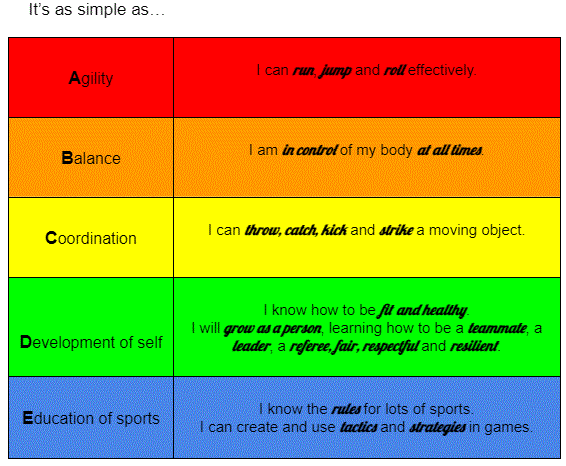
End points: Where are we heading for?
A sustained healthy lifestyle
- All children are physically active and fit.
- All children understand the benefits of a balanced diet and healthy lifestyle.
- All children are able to ride a bike and understand basic road safety.
- All children have access to out of school sports clubs and activities to maintain a healthy lifestyle beyond Year 6.
- All SEND children are fully included in lessons. Activities can be modified to support them…but expectations will not be.
- If a child cannot take part in a lesson (e.g. due to injury) they will still be expected to be involved in a tactical, coaching, refereeing capacity.
Swimming
- All children are able to swim 25m+
- All children are confident and secure in a swimming pool.
- All children understand and demonstrate basic water safety, survival and rescue skills.
- Children can talk, with confidence about their favourite professional swimmer including their achievements and their journey in the sport.
- All children have access to an external swimming club if they wish to further their development beyond Year 6.
Gymnastics
- All children can perform basic rolls, balances and controlled jumps.
- All children can plan, prepare, perform and evaluate a sequence of gymnastic movements both independently and in groups.
- Children understand and use correct vocabulary and terminology for gymnastics.
- Children can talk, with confidence about their favourite professional gymnasts including their achievements and their journey in the sport.
- All children have access to an external gymnastics club if they wish to further their development beyond Year 6.
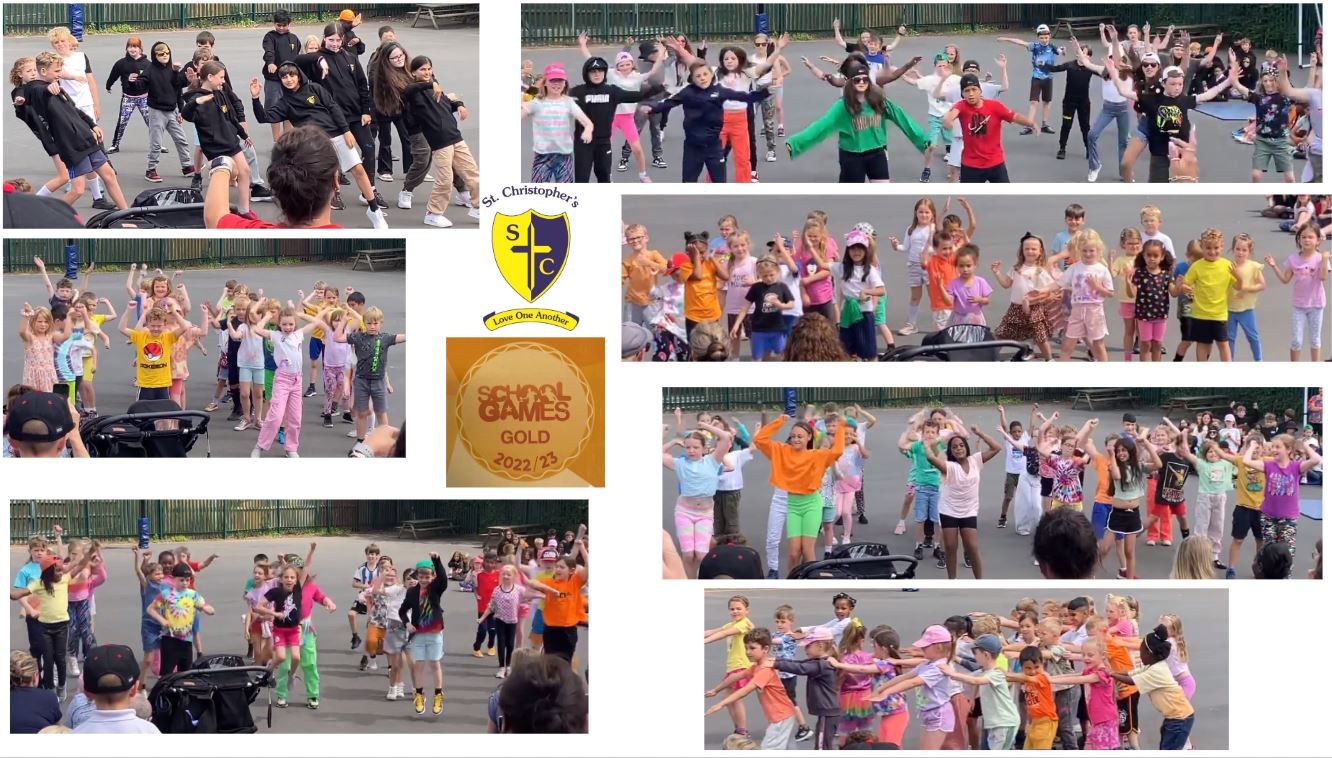
Dance
- All children can name and perform basic movements in a range of different dance genres.
- All children can plan, prepare, perform and evaluate a sequence of dance movements both independently and in groups.
- Children understand and use correct vocabulary and terminology for dance.
- Children have had the opportunity to study different styles of dance from around the world and from other cultures.
- Children can talk, with confidence about their favourite professional dancer/dancers including their achievements and their journey in the sport.
Bat and ball games: Tennis, Badminton, Rounders, Cricket
- All children have been taught how to throw and catch a ball accurately by the end of Key Stage 1.
- All children can hold and use a bat/racket accurately and perform a rally, against a wall or with a partner, by the end of Key Stage 2.
- All children can play badminton and tennis independently and have a clear understanding of the rules to both sports.
- All children can fully participate (bowling, batting and fielding) as a member of a cricket and rounders team.
- All children understand the rules to the games studied and are able to umpire/referee/officiate them impartially.
- Children understand and use correct vocabulary and terminology for tennis, badminton, rounders and tennis.
- Children can talk, with confidence, about their favourite professional tennis/badminton/rounders/tennis players including their achievements and their journey in the sport.
Invasion Team games: Hockey, Football, Tag-Rugby, Basketball
- All children have been taught how to throw and catch a ball accurately by the end of Key Stage 1.
- All children can pass and receive a ball accurately in each of these sports by the end of Key Stage 2.
- All children can play team sports and have a clear understanding of the different roles and responsibilities in a team.
- All children can fully participate (in a variety of positions) as a member of a team using and applying tactics.
- All children understand the rules to the games studied and are able to umpire/referee/officiate them impartially.
- Children understand and use correct vocabulary and terminology for tag-rugby, hockey, football and basketball.
- Children can talk, with confidence, about their favourite professional athletes in each sport including their achievements and their journey.
Outdoor and adventurous activities
- All children have had the opportunity to take part in an outward bound activity trip before the end of Year 6.
- All children will understand the concept of resiliency and have experience of overcoming a personal barrier.
- All children understand the importance of supporting each other -especially when someone is experiencing difficulties/needs help and encouragement.
Cycling
- All children can use a balance bike by the end of EYFS.
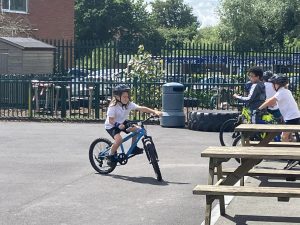
- All children can ride a bike by the end of KS1.
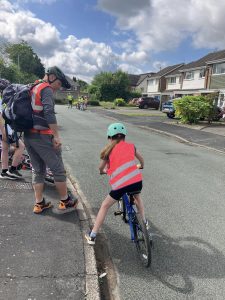
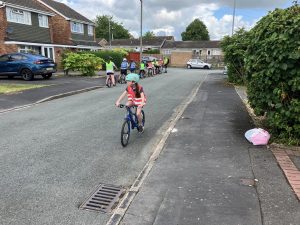
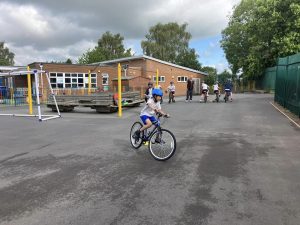
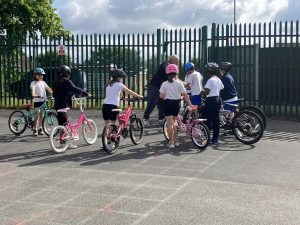
- All children understand road safety and have completed the ‘bikeability’ scheme before the end of KS2.
- Children are encouraged to cycle to school in KS2.
*Why cycling? Our school is located in the Staffordshire countryside on relatively flat land. Encouraging children to travel by bicycle will improve their lifestyle, fitness levels and independence while also reducing their carbon footprint.
Athletics / Cross County
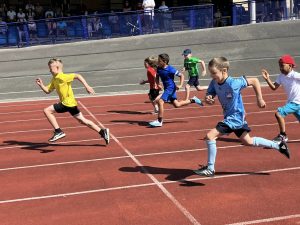
- All children will be able to run for prolonged periods of time.
- All children will develop resiliency and an awareness/desire to improve their own personal best (PB) in a range of different solo events.
- All children will be able to use the correct terminology and vocabulary specific to athletics and cross country.
- All children will understand the concept of resiliency and have experience of overcoming a personal barrier.
- All children understand the importance of supporting each other -especially when someone is experiencing difficulties/needs help and encouragement.
- Children can talk, with confidence, about their favourite professional athletes including their achievements and their journey in the sport.
Our Curriculum Drivers in P.E
“To bring out the best in ourselves by dreaming big, overcoming challenges and reaching our personal best.”
This driver encapsulates the essence of PE and sport. It will be evident in almost every lesson.
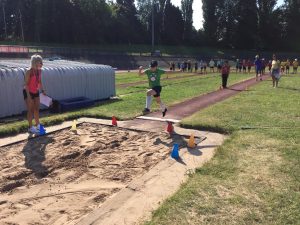
“To appreciate the wonder and awe of our beautiful world and to understand our roles and responsibilities in making it a better place.”
This driver will be found when studying sports, dances and cultures from around the world. Whenever big sporting events take place around the world it will be an opportunity to learn about that part of the world.
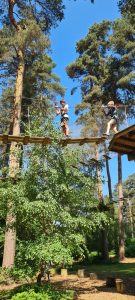
“To take pride in our own community at home, at school, locally and nationally while also celebrating and embracing the traditions and cultures of others around the world. ”
It is our aspiration that all children will take part in both inter and intra school competitions. This will help them to form a sense of identity, belonging and community. When competing against others at different levels children will learn about respecting others. When doing dances and sports from different cultures children will develop a new level of respect.
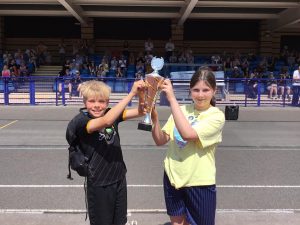
“Learning to make choices that keep our bodies and minds healthy.”
In lessons children will learn about healthy eating, the benefits of being active and be inspired to make long lasting changes that with help them to be physically healthy. Sport and PE will also enable children to develop their mental health and resiliency. They will be exposed to different situations within the curriculum that will give them the opportunity to win, lose, overcome barriers and achieve in a safe and nurturing environment.
Cultural Capital
What is Cultural Capital?
The term ‘cultural capital’ is associated with French sociologist Pierre Bourdieu (1930-2002). He used it to suggest why some children achieve better from an educational perspective than others. Bourdieu defined cultural capital as the various assets that people have including the way they speak, their level of education and their hobbies and interests. It is suggested that the amount of cultural capital you have can determine your academic achievements and success in the wider world.
From an educational perspective, in 2019, Ofsted defined cultural capital as “important to providing children with the essential knowledge they need to be educated citizens,preparing them for their future success”. In schools, this means providing knowledge, skills and a wide array of experiences about culture and the world in the past, present and future.
What does cultural capital look like in P.E at St Christopher’s?
- Introducing children to the best that has been thought and said about sport, competition, fairplay, teamwork, winning and losing to foster an appreciation of human creativity and achievement.
- Studies of famous sporting athletes -their successes and failures.
- Learning about the brightest minds and greatest historical moments to inspire and ignite passion in the children.
- Examples of resiliency. E.g. Overcoming adversity and failure. Coming from humble beginnings.
- The opportunity to be competitive and to learn how to win and lose in a safe environment.
- The opportunity to represent the school in competition (irrespective of ability) to nurture a culture of belonging and self-worth.
- Inspiring experiences: trips, guest speakers (e.g. athletes or former pupils who have excelled in P.E.)
- The opportunity to take part in Outdoor and Adventurous Activities with friends.
- Learning the essential skills of how to swim and ride a bike irrespective of your upbringing or background.
What are the expectations of the National Curriculum?
By the end of KS1
- Master basic movements including running, jumping, throwing and catching
- Developing balance, agility and co-ordination, begin to apply these in a range of activities
- Participate in team games
- Develop simple tactics for attacking and defending
- Perform dances using simple movement patterns
KS2
- Use running, jumping, throwing and catching in isolation and in combination
- Play competitive games, modified where appropriate [for example, badminton, basketball, cricket, football, hockey, netball, rounders and tennis],
- Apply basic principles suitable for attacking and defending
- Develop flexibility, strength, technique, control and balance [for example, through athletics and gymnastics]
- Perform dances using a range of movement patterns
- Take part in outdoor and adventurous activity challenges both individually and within a team
- Compare their performances with previous ones and demonstrate improvement to achieve their personal best.
Swimming and water safety
All schools must provide swimming instruction either in key stage 1 or key stage 2. In particular, pupils should be taught to:
- Swim competently, confidently and proficiently over a distance of at least 25 metres
- Use a range of strokes effectively [for example, front crawl, backstroke and breaststroke]
- Perform safe self-rescue in different water-based situations.
What does PE at St Christopher’s look like?